


Vision for the Irish Dairy Sector
To be the world's most trusted exporter of sustainably driven and technically advanced high-quality dairy products to customers worldwide.
Sector Summary
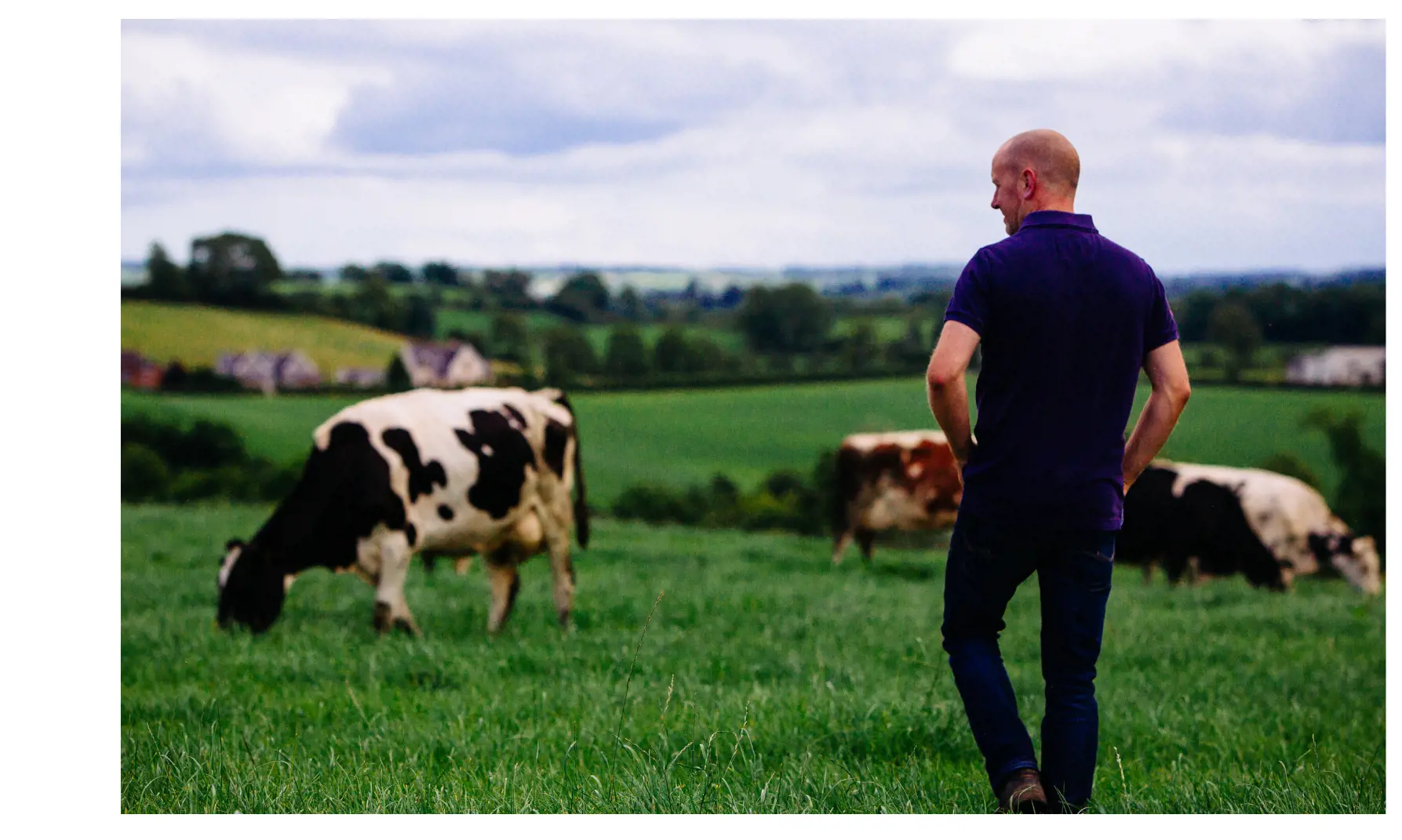
Ireland’s dairy industry is built on the tradition of cattle grazing outdoors on grassland pasture for up to nine months of the year on family-owned farms, often passed down from generation to generation. Indeed, it has been found that Irish dairy herds enjoy on average 240 days per year out on pasture, with 95% of their diet consisting of grass. This outdoor grazing system enables Irish dairy to be one of the most environmentally efficient in the world with a carbon footprint of 0.97kg CO2e per kg FPCM*.
These 17,000 farms have an average herd size of 91 cows and an average size of 55 hectares. Ireland has the longest grass-growing season in the northern hemisphere. This advantage is bestowed on the country by virtue of its island location on the western edge of Europe, with a temperate climate, plentiful rainfall and rich deep soils. Ireland has a population of just over five million people, yet it produces enough dairy to feed multiples of it. Our dairy production is focused on cheese, butter, powders and dairy ingredients.


Sustainable Growth
Irish dairy exports were valued at an estimated €6.3 billion in 2023, representing a value decline of almost 8%.
Milk collections in Ireland declined by near to 2% on 2022 levels to approximately 8.7 billion litres. This is the first year Irish milk supply has declined since production quotas were lifted in 2015. Challenging weather in the early summer months limited grass growth and was followed by heavy rainfall throughout the autumn which led to difficult grazing conditions.
Global milk supply grew by 1% in 2023 with Europe, New Zealand and the US all increasing output, with Argentina the only major exporter showing lower production. The world's largest dairy importer, China, continues to grow its milk pool, registering growth of around 2% albeit slowing versus the higher growth rates of over 8% in both 2021 and 2022.
Trends in the Industry
Prospects for 2024
From an Irish dairy output perspective, favourable weather and/or improved milk prices could help boost milk volumes for 2024 compared to 2023.
However, challenges regarding the impact of nitrates changes on stocking rates, accompanied by expensive land rental costs create some uncertainty from a milk production perspective as we head into 2024.
Globally, it is likely that there will be a modest increase in output from the main exporting regions. On the demand side most commentators are predicting modest import growth of 2% reflecting uncertainty around economic growth and affordability. Domestic production in China is predicted to rise again by around 2% in 2024. However, even with increased availability of locally produced dairy products, the market would still need to import almost 17 million tonnes of dairy products according to StoneX.
Demand for imported butter is predicted to increase by up to 5% in the UK. Per capita consumption of butter and cheese in the US is trending positively, with a forecast growth of 6% and 1% respectively.
Affordability impacted consumption negatively in the first half of 2023 as retailers, manufacturers and foodservice operators were all seeking to recoup their higher input costs via consumer price rises. With most of these price increases believed to be worked through the supply chain, lower on-shelf prices should attract consumers back to the dairy category during 2024.
Outside of trading, 2024 looks to be a pivotal year in terms of the sector’s requirements as part of the National Climate Action Plan commitments and the Fifth Nitrates Action Programme.


Contact Us
For more information on Irish dairy or to connect with Irish dairy suppliers, email us

More Information
View brochures from the Irish Dairy industry, directories of Irish dairy suppliers, buyer guides and much more